
Crawl Space Moisture Control in Summerville, SC
Moisture control is the stage that holds the result after the water and the ground have been dealt with. Buying it first is the most common way to spend money without changing anything.
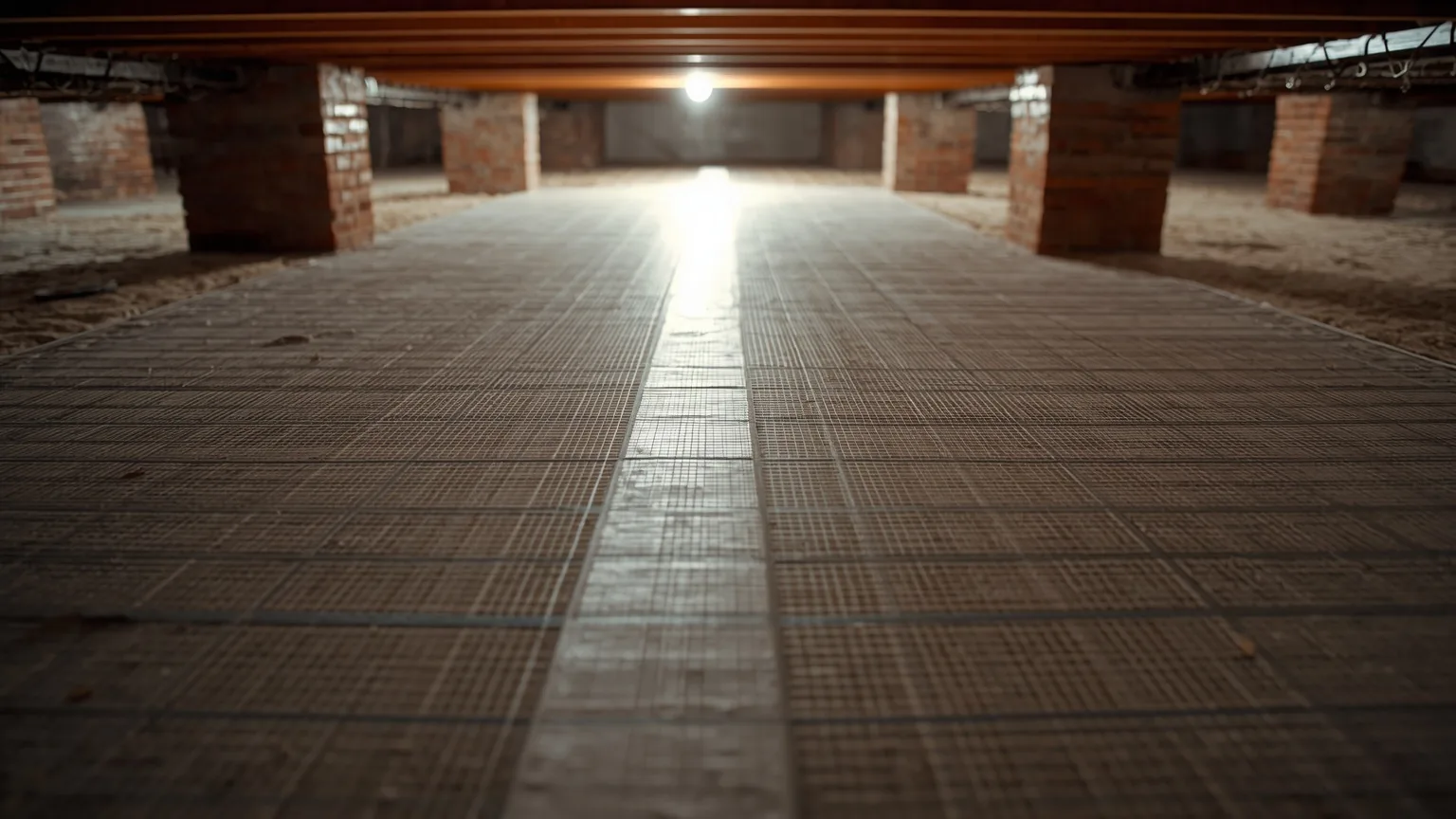
Who handles crawl space moisture control in Summerville, SC?
Summerville Crawl Space Solutions arranges crawl space moisture control across Summerville and nearby Dorchester County communities — identifying which of four moisture sources is actually present, then managing what remains. South Carolina's code permits a crawl space to be closed only alongside a drying method, so this stage is what makes sealing legitimate rather than optional. Call (843) 428-8285 to arrange an evaluation.
There are only four sources
Humid outside air condensing on cool surfaces. Vapour rising out of open ground. Liquid water entering from outside. A plumbing leak. Every damp crawl space is one or more of those, and each calls for different work.
The reason this matters commercially is that the four are priced very differently, and a quote that does not name which one you have is not a scope.
What homeowners notice
A musty smell on the ground floor that is worst in summer. Condensation beading on ductwork or water lines. Insulation sagging or on the ground. Floors that feel cool and slightly damp underfoot.
Seasonal timing is the most useful clue available without going under the house: trouble that peaks in a hot dry spell points at humidity, not at a leak.
Dehumidification and drainage solve different problems
A dehumidifier removes water from air. It does that well, and it does nothing whatsoever about water arriving as a liquid — running one in a space that takes groundwater is paying to dry a puddle continuously.
Drainage removes liquid water and does nothing about the humidity of the air that remains. Most spaces that are genuinely wet need the drainage first and the dehumidifier afterwards, in that order, and buying them in the wrong order is the expensive mistake.
What affects the cost
The variables are the volume of the space, how tight it is once sealed, whether the unit drains by gravity or needs a condensate pump, whether a humidistat and monitoring are included, and whether power has to be run to the space at all.
Running power is the item that most often surprises people, because it is electrical work rather than crawl space work and it is quoted separately more often than not.
When to get an evaluation
If the smell is seasonal, if there is condensation on cold surfaces, or if insulation keeps failing, readings will tell you which source you have far more cheaply than trial and error will.
A useful assessment measures relative humidity in the space and moisture content in the framing at several points, then names the source.
The worst week is often the one with no rain
A crawl space here is frequently at its most damp during a hot, dry stretch. Warm outdoor air holds a great deal of moisture, and when it comes through open vents and meets ductwork or a subfloor sitting below its dew point, that moisture condenses onto those surfaces.
Which means the vents installed to keep a space dry can be the route the water takes in — and that a homeowner watching the forecast for rain may be watching the wrong thing entirely.
Crawl Space Moisture Control questions
Will a dehumidifier fix a wet crawl space?
Only if the water is arriving as vapour. If liquid water is entering, a dehumidifier runs continuously against a source it cannot reach — drainage has to come first.
Does the ground need covering before dehumidification?
Generally yes. Open ground is a continuous vapour source, and covering it removes far more moisture per pound spent than any amount of mechanical drying.
What humidity should a crawl space hold?
A sealed and dried space should hold a steady relative humidity well below the point where decay fungi become active in wood. What matters more than any single target is that it stays steady through a humid summer.
Is mechanical drying actually required?
Where the vents are closed, yes — the residential code permits a closed crawl space only alongside one of the listed drying methods. Sealing without one is the failure the requirement exists to prevent.
Can I just open the vents instead?
In this climate that is usually what caused the problem. Vented crawl spaces bring in humid outside air that condenses on cooler surfaces underneath the house.
Related crawl space services
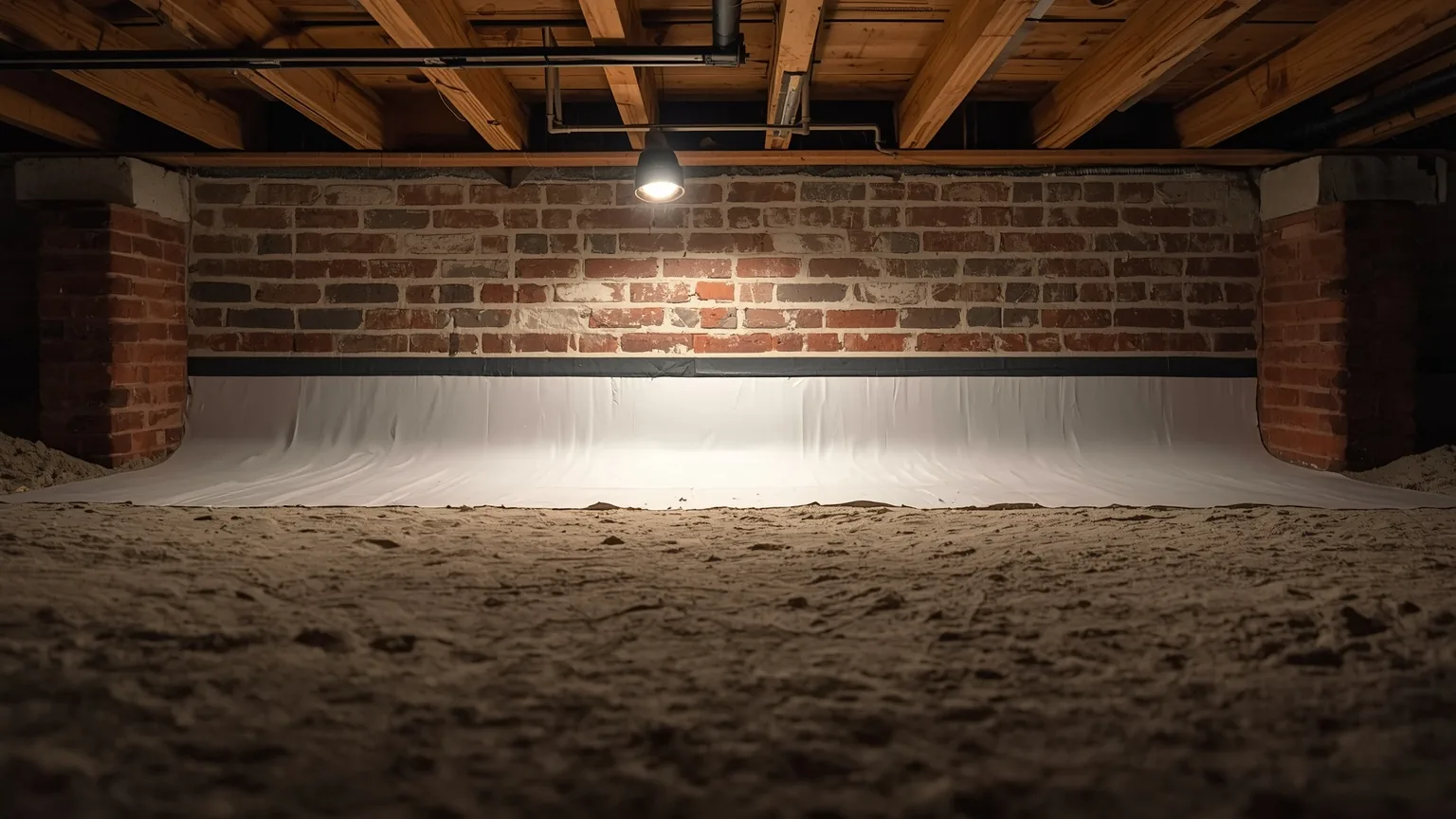
Crawl Space Encapsulation
The full sealed system — liner, closed vents and humidity managed afterwards.
Vapor Barrier Installation
Covering the ground to the code specification — often the best-value first move.
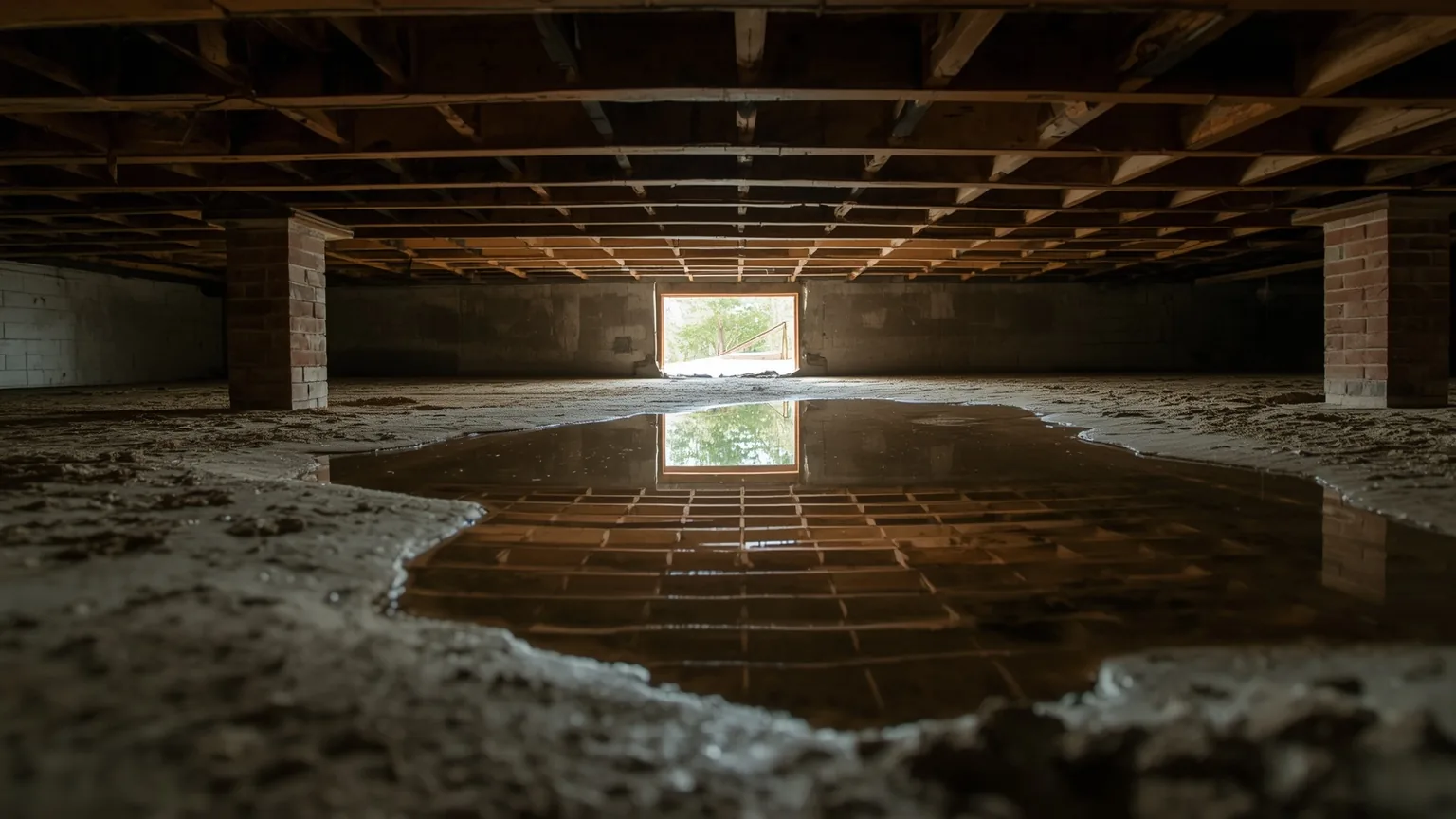
Crawl Space Waterproofing
Liquid water traced to its actual route in — then stopped, before sealing.
Crawl Space Cost
What moves the figure here — and the questions that make quotes comparable.
Find out what is actually causing it.
Someone under the house, moisture readings taken, and the scope written down before a price is attached.